A tenant sued her landlords over damp after a flood from the building's pipes, worsening conditions in the complex and a broken dishwasher, and the landlords filed a counterclaim against her. The court dismissed both claims, but ordered the landlords to return a ILS 7,000 security deposit to the tenant.
What happened
The tenant rented a flat in a residential complex in Eilat for ILS 5,400 a month, and also paid ILS 1,650 a month in maintenance and service charges. The flat is registered to a daughter, and her father manages it for her and dealt with the tenant day to day. The lease was signed for one year, from 1.6.2024 to 1.6.2025, and extended for another year to 1.6.2026.
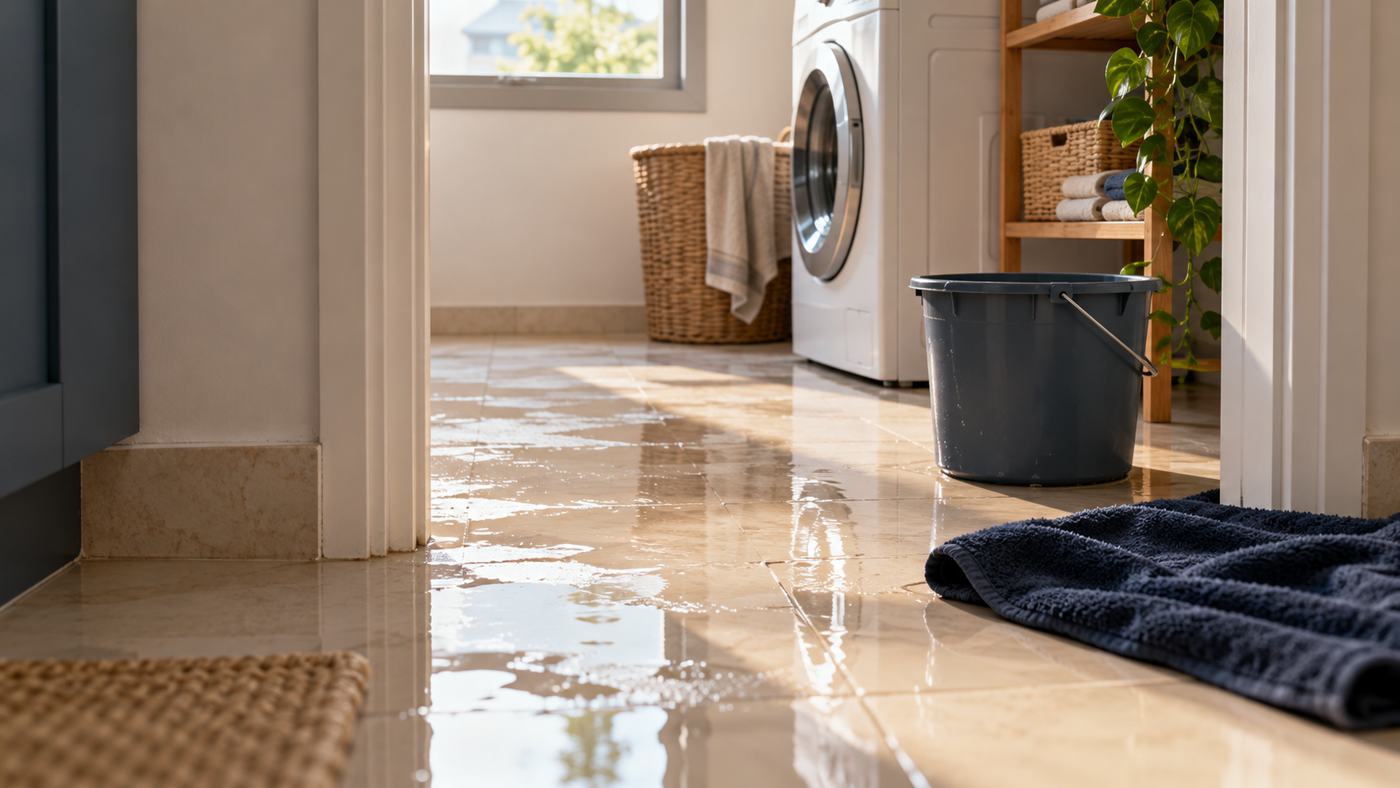
In August 2025 a water pipe in the building burst and several flats were flooded, including the tenant's. A dispute followed over how the damp would be dealt with, after which the owners told her they would not renew the lease for a third year.
The parties' arguments
The tenant claimed ILS 36,800, made up of three parts:
- ILS 10,000 in compensation for mould and damp that were not treated, and for presenting the place as a stable family setting when in fact it housed daily holiday rentals with a high turnover of occupants;
- ILS 19,800, half of the maintenance charges she paid over two years, on the ground that conditions in the complex had seriously deteriorated;
- ILS 7,000, the return of the security she had given the landlords.
She also said the dishwasher had broken and was never repaired. The landlords argued that the claim was baseless and tried to shift onto them responsibility that was not theirs. In a counterclaim for ILS 20,000, they said the tenant also used the flat for business, failed to pay building committee fees on time, exposing them to interest and to complaints from the building's management committee, and refused to let a contractor in to fix the damp in order to create grounds for a lawsuit.
The ruling on the tenant's claim
The court first found that most of the complaints concerned the complex and the shared pipes, which are the responsibility of the building's management committee, and the committee had not been sued at all. For that reason alone the claim had to be dismissed. On the merits, too, the arguments failed:
- Conditions in the complex: the tenant extended the lease for a second year without raising any complaint. Testimony from a committee member also revealed that after she moved out, she rented another flat in the same complex. In the court's view, her choice to stay there weakened her complaints. It added that it made no sense to claim back maintenance charges for two full years, including the period before the alleged deterioration, and that no evidence was offered that the charges she pays today are any lower.
- The flood: the water came from a building pipe, not from a fault inside the flat itself, and it was the building's insurance that was used. The father explained that under the insurer's instructions the damp had to dry out before repairs could be done, and the hearing showed that the tenant only partly cooperated in arranging the repair. The damage to door frames and cupboards was damage to the owners' property, not hers. For any damage to her own belongings, she had to prove it with receipts or documents, and she did not.
- The dishwasher: under the lease, the dishwasher is not part of the flat's contents, so the landlords did not have to supply another one.
- The security: the claim that the landlords were holding ILS 7,000 belonging to the tenant was not disputed, and their defence did not address it at all.
The ruling on the counterclaim
The counterclaim was also dismissed for lack of evidence. It was not shown that the tenant ran a business from the flat or received clients there. Phone calls or Zoom meetings connected to her job do not turn a home into a business, and her explanation that she provides phone support was not contradicted. As for the committee fees, no payment demand or record of a debt was produced, while the tenant showed documents proving she had paid everything. As for refusing to let the contractor in, the court did not hold it against her, just as it did not hold the delay in repairs against the landlords. She was the one who kept living in the damp flat, and the landlords did not prove they suffered any loss. The court's impression was that the counterclaim was filed mainly as a counterweight to the tenant's claim.
The outcome
Both claims were dismissed. However, the landlords must return the ILS 7,000 security to the tenant, if they have not already done so. No costs were awarded, and each side bears its own expenses. A request for leave to appeal may be filed with the Beersheba District Court within 30 days.
Key takeaways
- If the damage comes from shared pipes or the complex, check who is actually responsible. Suing only the flat owner, without the building's management committee, can get the claim dismissed on that ground alone.
- Tenants: if you have complaints about the flat or its surroundings, raise them in writing before you extend the lease. Extending without reservation will count against you.
- Keep receipts and photos of every personal item that is damaged. Without proof of the loss itself, no compensation will be awarded.
- Cooperate in arranging repairs and keep a record of your messages. Whoever delays access to the flat will find it hard to complain about slow repairs.
- Read the contents list in the lease. An appliance not listed, such as a dishwasher, is not the landlord's responsibility. And a deposit held without grounds must be returned to the tenant.
This article summarizes a published Israeli court decision in plain language and is not legal advice. Every case depends on its facts. The parties' names have been omitted. This is a first-instance decision and may be appealed.